Posts

Showing posts with the label Google

When the Stars Aligned...

Given the way Google considers everything as a problem that engineering can fix, I assumed its founders are pure geeks. Which made it all the more surprising how they’ve managed to run the company so well, and retain control… aspects you associate with managers, not engineers. Walter Isaacson’s Innovators answered those questions for me. When he was twelve, (Google founder) Larry Page read a biography of Nikola Tesla and was troubled by it: though he was one of the greatest of inventors, he was very poor at commercializing his inventions. Page describes his learning from that: “If you invent something, that doesn’t necessarily help anybody. You’ve got to actually get it into the world; you’ve got to produce, make money doing it so you can fund it.” Which is why Page made sure he majored in both computer science and business . He also got to learn from his older brother (by 9 years) Carl’s experience of founding a social networking company that was eventually bought by Yaho...

The Company Will Find You

All companies want to hire the best talent. But how does a company even know if you are looking for a job? What, if like most, you didn’t even apply to a particular company because you felt you weren’t good enough? Even worse, for both you and that company, what if you were wrong in assuming you weren’t good enough? Max Rosett described Google’s solution to this problem. He stumbled upon it as he was learning computer science via an online program and still lacking the confidence to apply for a full-time software job: “One morning, while working on a project, I Googled “python lambda function list comprehension.” The familiar blue links appeared, and I started to look for the most relevant one. But then something unusual happened. The search results split and folded back to reveal a box that said “You’re speaking our language. Up for a challenge?” Rosett took the challenge and went on to get the job. Google had identified and hired someone based on his queries! John ...

Cannibalize Thyself

Microsoft was a very successful one-trick pony (Windows/Office) for decades. But being a one-trick pony is exactly what every big tech company today seeks to avoid! If you thought this just meant having multiple products/brands ( a la P&G), think again. Tech companies today almost think cannibalistically! Steve Jobs, in fact, explicitly said just that: “If you don't cannibalize yourself, someone else will.” That mindset was exactly why Apple launched the iPhone even though it would cannibalize their iPods; and why they launched the iPad even though it would cannibalize their Macs. Facebook has its Little Red Book whose mantra is: “If we don't create the thing that kills Facebook, someone else will.” Amazon operates the same way, says Arjun Sethi : “Consider the Kindle: a device that became home to the world’s biggest bookstore, and lured people away from buying physical books. If Amazon didn't do it, someone else would have.” Google has always t...

Where Have You Been?

Todd Humphreys gave this TED talk where he said that something happened on May 2 nd , 2000 that changed the world dramatically. No, not overnight; but within a decade as smartphones took over the world. So what was that event? “On that morning, U.S. President Bill Clinton ordered that a special switch be thrown in the orbiting satellites of the Global Positioning System. Instantaneously, every civilian GPS receiver around the globe went from errors the size of a football field to errors the size of a small room.” Pretty soon, GPS accuracy got even better: “With more base stations, more ground stations, better receivers and better algorithms, GPS can now not only tell you what street you are on, but what part of the street.” Fast forward to present day when GPS and Big Data come together. Recently, Google launched a new feature called Your Timeline . If you use Google Maps, the feature lets you “view the places you’ve been on a given day, month or year”. O...

Privacy or Improved Service

Apple and Google. As Paul Nickinson wrote in his blog : “Apple makes a kick-ass product. Google makes killer services.” Combine the two and you get a “phenomenal Google experience on the iPhone”, as Rene Ritchie put it . And yet Apple keeps sniping at Google, especially on the data privacy front. Like the time when Apple’s CEO, Tim Cook wrote in a public letter : “We sell great products. We don’t build a profile based on your email content or web browsing habits to sell to advertisers…We don’t read your email or your messages to get information to market to you.” To which Ben Thompson says sarcastically : “You can almost hear it now: How admirable! Golly gee, Apple is such a better company than those hypocritical evil-doers at Google! Why can’t everyone treat customers so well? Apple good. Google bad. Facebook worse.” Thompson then goes on to point out: “User information of this type isn’t important to Apple’s business model, so they “choose not to retain it.” The...

Crime Fighter Google

Recently, Google alerted the authorities when its algorithms detected that a Gmail user was transmitting child pornography images. The cops then went on to arrest the man. A good thing, no doubt. But it makes one wonder how Google found the image? Are they opening every attachment in every mail? Don’t worry, it’s nothing that invasive. They use an algorithm created by (hold your breath) Microsoft! “Google makes use of Microsoft's PhotoDNA technology to scan emails, and calculate a mathematical hash for an image of child sexual abuse that allows it to recognize photos automatically even if they have been altered. The tech is now also used by both Twitter and Facebook, after Microsoft donated it to the NCMEC in 2009.”` But is this a slippery slope, wonder others? John Hawes, cyber security consultant asks: “There will of course be some who see it as yet another sign of how the twin Big Brothers of state agencies and corporate behemoths have nothing better to do than delve in...

Ads, Privacy and All That Righteousness

Image
The company so many love to hate, Facebook, recently announced that it would ignore the Do-not-track setting on your browser . It’s easy to see why Facebook would do something that could potentially invite a lot of ire: More tracking -> more knowledge about you -> more relevant ads -> more money from advertisers. Facebook justified the move by pointing out that “currently there is no industry consensus” on this topic (Twitter and Pinterest honor the setting; while Google and Yahoo do not). To which John Gruber retorted : ““Google does it” is not exactly a badge of honor, privacy-wise.” It sounded strange to me when Facebook simultaneously said that it will honor the settings to limit ad tracking on iOS and Android devices. Until Gruber pointed out that Facebook is just making a virtue out of necessity: “On iOS, they have no choice. Apple’s privacy controls are in the hands of the user, not the developer or advertiser. That’s why the whole “Do Not Track” thing for...

Dogfight for Mobile

I read this adapted extract from Fred Vogelstein’s book, Dogfight: How Apple and Google Went to War and Started a Revolution , and boy, I am already drooling to read the book. In 2005, Google was already working on its smartphone project. But two years later, when Steve Jobs launched the iPhone, Google felt like the “iPhone was a kick in the stomach”. Here’s how one of the architects of Android (Google’s smartphone OS), Chris DeSalvo, described his reaction to the iPhone: “As a Google engineer, I thought ‘We’re going to have to start over.’…What we had suddenly looked just so . . . nineties.” Google’s plans for the smartphone market were based on three points: 1)       Eventually, technology and bandwidth would allow people to surf on the move, via their phones. 2)      Telecom carriers would have to come around to the phone-as-more-than-something-to-make-calls-with view (feels like such an ancient view today, doesn’t it?). ...

Come, Mix and Match a Constitution

Alex E. Jones once said: “The answer to 1984 is 1776.” If you don’t like the American slant of that line, feel free to replace 1776 with “a constitution”. And the Internet just made that a whole lot easier. Yes, that’s right: the Internet just made it easy to cross-reference material while you try to be the next BR Ambedkar or Thomas Jefferson. Which makes sense, doesn’t it? After all, with around 160 active constitutions around the globe, there’s a whole lot of material to refer to. The problem (until now) was that each one was written in a different format: so how does one pick and choose parts from each? As Google said in its blog : “Although the process of drafting constitutions has evolved from chisels and stone tablets to pens and modern computers, there has been little innovation in how their content is sourced and referenced.” That is where Google’s partnership with Comparative Constitutions Project comes into the picture. Together, they launched a site called C...

(Bal)Loon or Looney?

It’s hard to imagine, but there are still large chunks of mankind that don’t have access to high speed connectivity even in the Western world , not just parts of Africa and Asia. Of the world’s population of 7 billion, only 2.7 billion are wired. Obviously, the company that benefits the most when more and more people get online is Google. No wonder then that it is Google that wants to create systems to allow anyone, anywhere to get connected…after all, smartphones are getting cheaper and cheaper. With cellphones, we bypassed laying cables as the way to provide connectivity. And now Google decided to bypass transmission towers (well, ok, they didn’t eliminate transmission towers altogether) by putting up balloons in the sky! Project Loon as it is called, aims at putting a ring of balloons around the globe that act as your wireless network. Plus, of course, a few ground stations to close the loop. And they also install special antennas in those remote areas that they seek to connec...

Map Makers and People Finders

Image
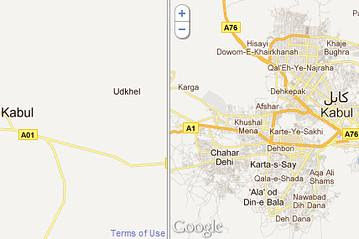
Everyone uses Google Maps: we realized (even more) how good it is after the disaster that was Apple Maps. In the US, of course, Google uses its famous self-driven cars to go around places and collect data to populate the Maps and Street View databases. But in places like India?  Jessica Pfund, Google’s Maps Product Manager, said: “We couldn’t buy maps in India. It wasn’t a question of money; there were just no maps to buy… Naturally, our engineers (in India) really wanted their hometowns to appear on the map. ” Which is why came up with Google Map Maker, an online tool to allow users to fill in maps with landmarks and details. This was way back in 2008 and India was among the first countries where it was launched (It was launched in the US in 2011 and in the UK only a few months back! Well ok, in those countries the maps were already so good, but still…). It works Wikipedia style, with users correcting other users. But do Indians actually fill in such maps? Do enough of u...

Traffic Jams and the 800 Pound Gorilla

Google just bought Waze, the company that developed an app that warns you about traffic jams and suggests diversions to take. In case you were wondering how that is any different (or better) than what you might hear on the good old radio, then these lines by Jeff Jarvis should help understand: “ A long-ago colleague of mine said his rule was to go wherever the radio traffic reports said there was a jam because (a) by the time they found out about it, the jam was gone and (b) every other idiot was listening to the radio and avoiding that spot themselves.” So how does a phone app like Waze address these two problems? Well, Waze solves the first problem – delay in identifying jams – by collecting data from all those smartphones in real time and then inferring where the jam is. How? If lots of people on a route slow down or barely appear to move (stop and go traffic), then the Waze servers infer there must be a jam. And warn the others to take alternative routes. Since your mov...

Predictive Search

I read this recent blog by Nicholas Carr (he of the “ Is Google Making Us Stupid?” fame) criticizing Google for its Autocomplete feature (you know where you start typing and Google shows you likely ways you are likely to finish that query) and now its attempt to give you an answer before you even asked the question! So what is Carr’s objection to Google’s prediction algorithms? His minor grouse is that: “Google’s goal is no longer to read the web. It’s to read us.” I am guessing Carr doesn’t like his mind to be read. Even if it’s only by an algorithm. As an aside, if we are that predictable, doesn’t it open up questions about free will? But ok, that’s a topic for another day blog… Moving on to his major grouse: he quotes Eric Schmidt, who in 2006 when he was Google’s CEO, felt that Google should “tell me what I should be typing.” Imagine that: to give you an answer before you even asked the question! How awesome would that be? Well ok, that feels a bit creepy too. ...

Maps Over the Last Decade

I remember this time over a decade back when we were returning home from Noida and I had to call out directions using (then the best map) Eicher Maps. One would have to do things like holding the map at a weird angle to align it with the direction you were travelling or risk mixing up your left and right turns. Fast forward to today and pretty much everyone uses Google Maps. Speaking of which, I found this interview with Michael Jones of Google Maps revealing. When asked about the biggest change that’s happened to maps, he said: “The major change in mapping in the past decade, as opposed to in the previous 6,000 to 10,000 years, is that mapping has become personal. It's not the map itself that has changed. You would recognize a 1940 map and the latest, modern Google map as having almost the same look. But the old map was a fixed piece of paper, the same for everybody who looked at it. The new map is different for everyone who uses it...So a map has gone from a static, st...

The French Now Hate Google Autocomplete

I used to associate the US with crazy lawsuits, like people suing fast food chains because they spilt hot coffee on themselves! Turns out the French are just as mad. The latest such case of French insanity is where a French anti-discrimination organization, SOS Racisme, sued Google for its, hold your breath, autocomplete feature. So what about autocomplete is so offensive to the French? Turns out if you type the names of certain celebrities on Google’s page, autocomplete shows the word “Jew”. The French, of course, are too dumb to know how Google autocomplete (or anything else for that matter) works: -          Autocomplete is an algorithm that shows suggestions based on search phrases that the majority of people typed in the past. -          Further, autocomplete does localization, i.e., the suggested phrases shown vary from place to place to reflect the popular choice in that region . Now that you under...

Maybe Innovation’s Not for Everyone

Pretty much all companies talk about the importance of innovation, to be creative, to come up with new ideas. Google has its famous 20% Rule: employees can spend 20% of their time on activities/projects that interest them without considering whether/how what they do could benefit the company. The idea is that if people do what they like, then some of those ideas may hit gold. Possibly. Some times. I heard that Facebook takes it even further and allows pretty much everyone to do whatever they like all the time ! That seems outrageous at first. But if you stop and think, what exactly do companies like Google and Facebook really need their employees for? I mean, their algorithms are already written, servers deployed with redundancies and backups built in already. They are not manufacturing companies; so they don’t that need to build one more fridge or car (or anything else) to sell more. Since they provide everything for free, they don’t have service contracts to provide free upgrades or ...

Capitalism as Creator and Destroyer

Image
Facebook was in the news because Goldman Sachs’ investment in it valued the company at $50 billion. That’s $50 billion for a company that makes $2 billion a year in revenues ( not profit). So why pay so much for it? One of my friends said people are willing to pay so much because they expect (hope?) Facebook will figure out a way to generate money via advertising. Or they’ll find a completely new way of making money directly or indirectly from their 500 million members. After all, who can predict the ways of the “brave new world”, my friend asked. And that’s capitalism: creating new ways to make money. Capitalism, of course, can also destroy existing ways of making money. Like when Google started offering free navigation services on its Android OS for cell phones in late 2009, Nokia had to follow suit and stop charging for its Ovi Maps (Who’d pay for Nokia’s navigation service if they could get it free from Google?). And with both Google and Nokia making navigation directions free...

Mixing Ads and Content

Chris Anderson, curator of TED and author of The Long Tail is a smart guy. And his book on the economics of Free makes for interesting reading. In that book, he points out an interesting difference between the physical and digital worlds when it comes to placement of ads and content. Anderson points out that traditional media build a Chinese Wall “between their editorial and advertising teams, to ensure that advertisers cannot influence the editorial e.g. by ensuring that a car ad is not next to a car story or a Sony ad anywhere near our reviews of Sony products.” In the digital world, he points out that companies like Google do the exact opposite: they match ads with content! Having made this observation, he then tries to analyze why such matching is taboo in print but so successful online…and with no loss of credibility? I was surprised Anderson doesn’t seem to realize that it’s not an apples-to-apples comparison. In print, the magazine/newspaper is the content provi...

Sharing Ain’t Always Good

Image
Lots of people advocate openness, transparency and sharing in the context of ideas. Some take it too far, though, when they advocate that even algorithms should be available for everyone to see. Like when European regulators start pushing Google to open up its algorithm that ranks websites. The stakes are very high. For most of us, search is synonymous with Google. And few look beyond the first couple of results that Google throws up. Any lower and nobody even knows the site exists! If you own a bookstore or hotel and show up low down the list, it is disastrous for business. No wonder it is businesses that are pushing to open up Google’s algorithm. (Some of them complain they are ranked lower even though they are the most relevant result). It’s obvious why Google itself would be against the idea. After all, once the algorithm is public property, out goes Google’s monopoly. And its multi-billion dollar empire. Well, you might say, that’s just too bad for Google. But is there any other ...