Posts

Showing posts with the label West

History of Western Trade Imbalance with China

China is the world’s factory. Everything is made in China. Every country buys from China. And therefore, pretty much every country has a trade deficit (total value of exports minus total value of imports) with China. While more and more countries rightly worry that China can lock them out of more and more critical items (rare earths being the most recent example), the US under Trump in particular is also worried about the trade deficit with China.   It was in this context that I was struck by Tomas Pueyo’s post . “What happens when the West owes China so much they can’t repay the debt? How should we understand the current trade war between the US and China? What we don’t realize is that this isn’t the first time this has happened. ” Huh? Pueyo elaborates.   Go back around 2,000 years, when Rome ruled Europe. Pliny the Elder lamented even back then: “India, China and the Arabian peninsula take one hundred million sesterces from our empire per annum at a conse...
Industrial Internet of Things: West and China

We know of the Internet of Things (IoT) – it refers to interconnected devices that “talk” to each other. Like the wearable fitness sensors that report back to your smartphone. A decade or so back, there was also talk of the industrial variant of it, the so called Industrial Internet of Things (IIoT), writes Nicholas Welch: “The belief was that the falling cost of cloud computing, sensor costs, and machine learning — coupled with new connectivity technologies such as 5G or IPv6 — would lead to a revolution.” Revolution in what? In manufacturing efficiency, in predicting when an equipment would have problems (say your washing machine or a wind turbine) and then proactively sending the service guy to fix it, in reducing system downtime and thus productivity increases. Add data analytics on top of that, and we should have had massive productivity increases. So why didn’t that happen?   Simply put, there are too many different players whose systems needed to be integrated. (1) ...

Broader Lesson from the Fraying of the West

Is the idea of NATO and joint Western defence fraying? T.Greer wrote a balanced, well-thought post on the topic. Change in views, in the list of what matters etc can be very disruptive. “Sons dishonor their fathers. Daughters rise against their mothers. Ancestral ideals are cast aside, and possibility staggers forth from its long captivity, ready to wreak vengeance on mankind.”   Fourteen years ago, well before Trump , ex-US Secretary of Defence, Robert M Gates was worried that joint Western defence was at risk. Since World War II, he said, the US (politicians, voters) felt that keeping Europe “whole, prosperous and free” was beneficial to America. But that mood was starting to change, he warned: “If current trends in the decline of European defense capabilities are not halted and reversed, future U.S. political leaders—those for whom the Cold War was not the formative experience that it was for me—may not consider the return on America’s investment in NATO worth the cost...

To Egypt and the Roman Empire

From present day perspective, it is astonishing how far west Buddhism had spread, as William Dalrymple describes in The Golden Road . Most of us probably didn’t know that were such gigantic statues of Buddha in Afghanistan until the Taliban destroyed the Bamiyan Buddhas. But Buddhism had spread even beyond Afghanistan at its peak.   In 2022, archaeologists in Berenike on the Red Sea found the head and torso of a magnificent Buddha in the storeroom of an Isis temple (Egyptian god). The statue hadn’t been transported from India – it was made of stone found in Turkey and was in a combo of styles – part Indian, part Roman-Egyptian. In that same temple, they found a stone memorial of the trinity of Hindu gods. There were also bilingual inscriptions in Greek and Sanskrit. Indian influence had spread very wide indeed.   The trade between Egypt and India was enormous. How do we know this? From the tax records of the Romans (who ruled Egypt). While sea travel and trade had its...

How the Role of Western Governments Evolved

Most of us never learnt Western history from a social perspective – how, for example, did the Western welfare state emerge? Prof. Karthik Muralidharan looks into that in his book, Accelerating India’s Development .   Long, long ago, Western governments monarchies were about one thing only – security. After all, it was a time when your neighbor could attack, defeat, loot and occupy you, and enslave or kill your inhabitants. Those were savage times.   The role of the Western state changed only with the Industrial Revolution. As production increased phenomenally, better systems were needed. Roads, ports, railways initially.   As urbanization followed industrialization (people migrated for better paying jobs from the villages), the populations of towns exploded. Sanitation and sewage systems had to be improved. These improvements in turn boosted productivity and the state’s tax revenue, which could further improve infrastructure (and yes, continue to fund the militar...

Immigrants and the West

I read of this Italian town called Monfalcone that banned (surprise, surprise) cricket! Why? And who even plays cricket in Italy? Therein lies a tale. In the 1990’s, the town had a need for labourers to build ships. The locals (and most Europeans) weren’t interested, and so the role went to Bangladeshis, most of whom were Muslims. Thus, a third of the town are foreigners. “In Monfalcone, Italians in Western clothes mingle with Bangladeshis wearing shalwar kameez and hijabs. There are Bangladeshi restaurants and halal shops .”   The culture difference, the Islamic angle, the rise of the right wing in Italy… cricket was the last straw in this town. Outsiders, not integrated, and now insisting on playing their “national sport” – it was just too much for this town. ~~   It reminded me of Shruti Rajagopalan’s post on an unrelated topic – the young population of India and its global ramifications. “Globally, one in five people below 25 is from India. 47% of Indians,...

AIDS - the White Man's Story

In his awesome book, Spillover , David Quammen talks of the story of yet another famous zoonotic disease, AIDS. This is the history most of us know of how AIDS came to be. Gaëtan Dugas, a young Canadian flight attendant, was the notorious “Patient Zero”, the man who “carried the virus out of Africa and introduced it into the Western gay community”. His job was the catalyst that lit the fire: “As a flight attendant, with almost cost-free privileges of personal travel, he flew often between major cities in North America… notching up (sexual) conquests, living the life of a sexually voracious gay man… He was handsome, sandy-haired, vain but charming.” The man contributed to the idea of his outsized role in the spread of AIDS: “Dugas himself reckoned that in the decade since becoming actively gay he had at least twenty-five hundred sexual partners.”   No wonder it’s easy to see Dugas as “Patient Zero”. But, as Quammen writes: “What the word “Zero” belies, what the number “0...

The Road They Took

Image
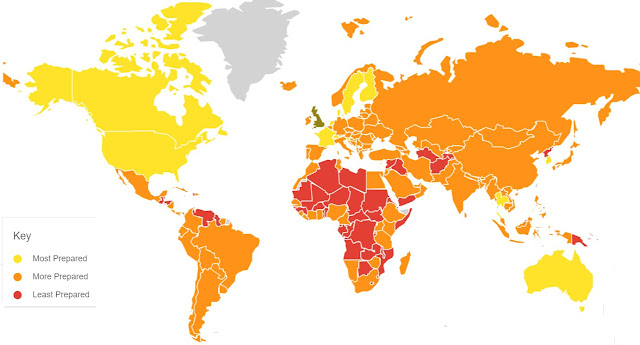
It was just a couple of months back that China locked down Wuhan, the point of origin and epicenter of the coronavirus epidemic. To almost everyone outside China, it felt like a brutal measure. The West smirked: it was just the kind of response a communist government would undertake. No free society would tolerate such measures, they said. Strangely, the West hardly anybody paid attention to South Korea, Japan, Hong Kong and Singapore who took similar measures, along with a lot of random testing to gauge the extent to which the virus had spread/was spreading. And as the virus seemed to come under control in those countries, the West didn’t bother to check if the measures (lockdown and random testing) were instrumental in how the situation had played out in those countries. To be fair, the West had reason to be confident. Previous outbreaks like SARS and H1N1 were contained, and barely spread to the West. And the GHS index that tracks global health security measures to deal with...

East or West, it's the Same

The FBI investigation into evidence of collusion between Trump and Russia ended with a “no collusion” finding. Ross Douthat wrote that: “There will now be a retreat… to more defensible terrain — the terrain where Trump is a sordid figure who admires despots and surrounded himself with hacks and two-bit crooks while his campaign was buoyed by a foreign power’s hack of his opponent.” Alan Jacobs doubts that’s what will happen next. Instead, he feels the side that hates Trump (common man and media both) will: 1)       Ask for the entire report to be made public; 2)      If only parts of the report are made public (as is likely), they’ll say that the not shown parts are the “key to the whole mystery”; 3)      And if the whole report is shown, they “will find  something ,  anything , in it that, they insist, confirms their worst suspicions”; 4)      Say that the investigating age...

Germany is no Leader

Is Germany, as Tyler Cowen argues , the “Silicon Valley of political innovation”? Here’s why he feels so: 1)       Post-war de-Nazification : As Cowen says, “it is difficult in world history to find a comparable switch in attitudes” anywhere in the world. 2)      German unification : The unification went through with barely a glitch, despite the vast economic differences between the two sides. And in record time. Most places split up, and “Large-scale political mergers seem to belong to the era of the 17th to early 20th centuries, but Germany pulled this one off”. It’s hard to argue with the above, but where Cowen goes wrong in my opinion is when he cites the EU (which was formed due to a large push by Germany) as yet another successful example of German innovation. What makes his view even more surprising is that he wrote this in May, 2017. After all, isn’t this the how most of us think of the EU today? -     ...

Tale of Three Democracies

The younger, seen-the-West generation has varying degrees of pride in India. Sure, they have their complaints and criticisms too, but when I was a kid, people rarely had any pride in any aspect of modern India. If at all, their pride was limited to ancient philosophies or ways of life from back then. But even today, there are still plenty of Indians who talk of the West as if it is better than us on parameters where the situation has actually turned 180˚, done a U-turn. Take the recent ranking of countries based on the confidence of citizens of a country in their government. Keep in mind this was done by the OECD, a grouping of most of the world’s largest economies, barring China and Brazil. While India was 3rd best on that list, both the US and UK were below even the average confidence ratings among the OECD countries! Some people tend to explain this as a Trump/Brexit induced effect. But even if that was true (and it probably is), it only raises another question. After al...

Mobile in the West

A while back, I wrote about how many Asian companies are going “mobile only” and dropping their websites altogether. The primary reasons for that were more people accessed the Net via their phones than PC’s and low broadband speeds. Now Ben Evans gives several reasons why the “mobile only” approach makes sense even for many Western companies ! He starts by referring to the old computer science saying that “a computer should never ask you a question that it should be able to work out the answer to”. And guess what? “A smartphone knows much more than a PC did…It can see who your friends are, where you spend your time, what photos you've taken, whether you're walking or running and what your credit card is.” And so: “The sensors, APIs and data that are available (with permission - mostly) to a service you want to use on a smartphone are vastly greater than for a website isolated within a web browser on a PC. Each of those senso...

Different Places, Same Patterns

Maybe the self-proclaimed liberal and secular folks should take a step back and see why India seems to be headed the RSS/Hindutva way (Actually, they should check whether that’s even true on the scale they believe it’s happening but that’s too much to ask). Steven Emerson proclaimed on Fox News that there are “places where the governments — like France, Britain, Sweden, Germany — don’t exercise any sovereignty. . . . You basically have zones where sharia courts were set up, where Muslim density is very intense, where the police don’t go in, and where it’s basically a separate country almost, a country within a country”. (Note that Fox is a notoriously right-wing, Bush-supporting news channel in the US, but that doesn’t change the validity of the rest of this blog). As expected, this triggered a huge reaction including a threat to sue from the Paris officials. Emerson and Fox apologized. Daniel Pipes, however, says that we should do a reality-check. Sure, h...

Greek Philosophy and the Role of God

Everyone knows that Hellenic (Greek) philosophy is the bedrock of Western civilization. By that, most people refer to the Hellenic legacies of democracy, abstractions and generalizations (the “Ideas” of Plato), the clarity generating “Logic” of Aristotle, and the concept of defining all terms. Including defining terms like justice, ethics and morality. You can agree or disagree with their definitions; but at least they were willing to stick their neck out and take a stab at such items. Far less, however, is said about the Greek impact on the idea of God in the West. The Greeks philosophers, be it Socrates or Plato or Aristotle, were all practical men. While they certainly had some idealism in them, they were pragmatic about what was possible in the realm of governance. Plato felt that no ideal society (Utopia) ever comes to be because men are not content with a simple life. That men are acquisitive, ambitious, competitive, and jealous. Aristotle was a bit more cynical (realistic?) and ...