Posts

Showing posts with the label Phone

No Voice, All Data

During my college days, there used to magazines like Voice & Data . Today, everything is Data. Thanks to the rise of the smartphone, the purpose of the phone has changed, as Thomas Ricker wrote in this awesome article : “With the invention of smartphones, the "phone" is just another communications app. One that is quickly being demoted from the favorites bar. Hell, most modern phone reviews don’t even bother discussing call reception.” Ian Bogost wrote this great article on why this transition happened: it’s not just a social phenomenon, it’s also technological! Mobile, being wireless, meant that “signal strength, traffic, and interference can make calls difficult or impossible”. We have come to accept that to a point where “phone calls (are) synonymous with unreliability”! In that unreliable world came all the messaging apps: being “asynchronous, a slow or failed message feels like less of a failure”, says Bogost. Then there’s the historical choice that tel...
Camera Toy: How Anachronistic!

Image
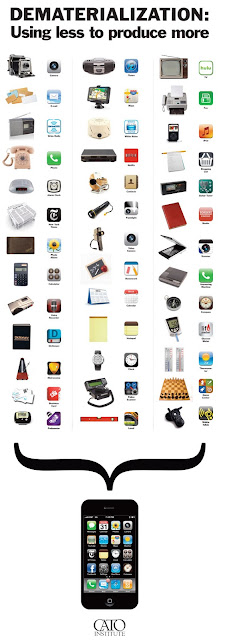
The other day, we bought a toy camera for my daughter. What she did with it and the things she said took me down memory lane. Within a short time, she was talking selfies with it! I was contrasting that with how much effort and planning it took my dad to get into the family pic he was taking: he’d put the camera on a tripod; add a timer device to the camera; and then rush to be in the pic before the timer expired. It took her a while to understand that there is such a thing as a standalone camera. Isn’t a camera always a part of a phone, she wondered? We had to show her my old, analog camera to convince her that such things actually exist! It made me realize that separating a camera from a phone must have seemed like the splitting of the atom to her! As this pic below shows, the smartphone is the atom for today’s generation. While showing her that analog camera, I was telling her this is how cameras used to be in the old days. How old, she asked? Was this used when the ...

Not Just a (Phone) Number

Phone numbers. Remember those 7, 8 or 10 digit numbers we used to memorize or note somewhere? Life got a lot easier with the advent of cellphones where we could save numbers against names. But can we get rid of phone numbers altogether? That’s the question Darren Murph asks . No, he’s not just cursing the pain of remembering those numbers. He points out how outdated the whole concept sounds, when you step back a bit: “For starters, dialing any number outside of your own country involves fees—fees which seem thoroughly absurd in an age where the internet has enabled limitless communication without borders. The cost of making a simplistic voice call has been driven to zero by the likes of Google Voice, Skype, Apple’s FaceTime Audio, Facebook, Viber, and countless others.” Why not switch to a user ID based system instead of a phone number? Murph agrees that not all voice calls today can be routed over VoIP. But shouldn’t carriers start moving in that direction, he asks? “W...

Next Big (Indian) Company

Their first phone, X1i, cost Rs 2,150 and was a big success in rural India. Today, they are the 3 rd largest seller of mobile phones in India overall; and 2 nd largest in the smartphone segment. Their revenue for the first 6 months of this year was Rs 3,100 crores and they hope to be a billion dollar company this year. That company is Micromax, the Gurgaon based Indian company. In a (mobile) world dominated by Samsung and Apple, what is Micromax’s strategy? They are OK “ to buy technology that is one generation old”. Which isn’t as bad as it sounds, given that “a generation in the smartphone space is often measured in just a few months” , as Forbes puts it . Then they offer “‘good enough’ options for a fraction of the price charged by the ‘premium’ products.” Good enough at low prices. That approach makes perfect sense in a country like India that is very price conscious. Add to that the fact that only 18% of Indians own a smartphone; and you have a huge number who wil...