Posts

OED #1: The Meeting

Simon Winchester’s book on the making of the Oxford English Dictionary (OED) is quite interesting. Since the topic of the book doesn’t exactly sound like riveting material, Winchester decided to narrate it with emphasis on one particular aspect, the one with the most masala in it.   The editor of the OED, Dr. James Murray was keen to meet one of the prolific volunteer contributors to the effort, one Dr W.C. Minor. While they’d corresponded over 20 years of effort, the two had never met! If the mountain will not come to Mohammed, then Mohammed would go to the mountain. And so Dr. Murray got on a train from Oxford, got off at Crowthorne Station, and took a carriage to the address, a mental asylum. He met the governor and requested a meeting with one of the doctors who worked there, his contributor.   The governor’s answer stunned Murray: “Dr. Minor is most certainly here. But he is an inmate. He has been a patient here for more than twenty years. He is our longest-se...
Basketball Classes

Image
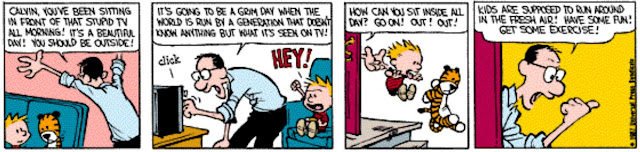
The weekend basketball class for kids in our apartment soared in popularity during COVID-19. Initially it was because it became the one venue where enough kids would turn up – back then, not too many kids would come down to play in the evening. But the bigger reason was that it provided some exercise – parents could see their always-at-home kids were ballooning up by endlessly munching and watching TV/streaming channels all day. Kids as young as 5-6, who can barely toss the ball a few feet above their heads, are being sent to the class! The coach has smartly adapted these classes to try and ensure the kids move around, exert themselves, and last and definitely least, even learn to throw the ball in the general direction of the target. The first thing he has them do in class is to take do a lap of the complex – no, the aim isn’t to warm up; rather, it is to ensure the kids tire themselves a bit. He tried incentivizing things by offering chocolates to the first few to cross the line. Of...

Winning v/s Perfectionism

As reigning world chess champion, Magnus Carlsen, is getting ready for his title defence, San Ingle mentions something very interesting he said: “The biggest advantage is that I am the better chess player… Having said that… there’s a famous quote: It’s not enough to be a good chess player. You also have to play well.”   Since Carlsen has an excellent record in tiebreaks (if the main series of games ends in a tie, they play rapid games), Ingle asked whether he intended to aim for “a thumping victory, or is he prepared to win ugly?”. Carlsen’s answer: “I am happy to win in any way possible. I’m somebody who puts more emphasis on the sporting aspects of chess than the artistic. And even more so during world championship matches. It’s about getting results.”   Carlsen’s focus on winning, with artistry relegated as a good-to-have, not a must-have, reminded me of something I read in the autobiography of tennis great Andre Agassi titled Open . Agassi, of course, was an a...

Diverging Views on Tech

In his terrific book on the impact of software on the world, Coders , Clive Thompson points out that: “In recent years, a welter of computer languages aimed at children – like MIT’s popular Scratch language – and initiatives like Hour of Code and robotics competitions (have sprung up).”   In the US, privacy concerns have hit even such for-kids options. In Chicago, for example, public schools suddenly found the plug pulled on many such popular options because, hey, they violated some students online protection laws. “Among the software products that violate the law, CPS (Chicago Public Schools) now says, are programs like Code.org, which is widely used in computer science classes, and Adobe applications used for artistic design and newspaper page layouts. That left has many high school newspapers unable to produce their print editions. Also off limits is Scratch, software to create interactive stores, animations and games.” Most for-kids languages these days work online, ...

Data and Governments

By definition, any statistical analysis is based on data. Setting aside genuine errors (wrong sample size, unrepresentative sample set, wrong questions asked), Tim Harford talks at length about the problem of data used by governments, in his book, How to Make the World Add Up .   As we know all too well, data can be misleading, even without malice. With governments though, the danger of such wrong data is enormous: “It’s one thing to be wrong… (but) because the state is powerful, its misperceptions of the world often take physical form, producing well-meaning but clumsy and oppressive schemes.”   But of course, with governments, the problem is worse. They often pressurize agencies to come up with data that suits them. I’ll avoid such examples from India since that just becomes a political discussion in no time.   Independent agencies are not a magic bullet that solves the problem: “(Independent) official agencies often get them wrong… (just that) they don’...

Farm Laws Repeal - Losers and Winners

The Modi government caved in and announced the repeal of the farm laws, “a game in farmland corporatisation”, as Jagdish Rattanani termed it. Some were happy for the reason Pratap Bhanu Mehta mentions : “The movement has forced the government to, uncharacteristically, eat humble pie.” Is this a sign of the tide (finally?) turning, wonders Mehta: “It emboldens civil society and social movements. This government has pretty much had a free run in containing or suppressing social movements.”   Or one could wonder if the BJP is just making a strategic retreat based on its bigger picture calculations (staying in power), points out Rattanani: “The action comes close to key state elections in Uttar Pradesh and Punjab… New allies are waiting but won’t shake hands till the hated laws are out of the way.”   Or should we not be extrapolating this one topic, as Ashok Gulati says . Should this be looked at as one issue only – farming reforms? Perhaps there is merit to both...

The Right to Remain Unvaccinated?

Image
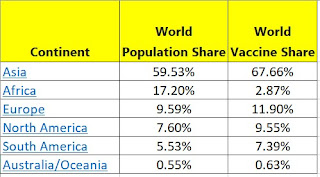
Yet another wave of COVID-19 is slamming into Europe. “The spread of the more infectious Delta variant, an increase in communal activity, a return to the workplace and a sluggish rollout of booster vaccines, which are recommended six months after the second jab, have been blamed for the increase in infections.” No wonder then that patience among the vaccinated majority wrt the unvaccinated “holdouts” has begun to run thin.   In Austria , for example, 65% are vaccinated. Until recently, the unvaccinated weren’t allowed into restaurants and cinemas. Now they won’t be allowed to step out of their homes. Except to go to work or buying food. Huh? Won’t every unvaccinated person who gets “caught” outside claim he was going for one of those activities?! In any case, protestors say such moves are unconstitutional, and there are placards saying, “Our bodies, our freedom to decide”.   Germany ’s vaccination rate is practically the same as Austria, at 67%. As cases spike, ...