Posts

Showing posts with the label science

Injurious to Mix Science and Ideology

Once upon a time, people weren’t sure how inheritance worked. At that time, the Lamarckian inheritance was a legitimate candidate – it said that organisms could pass on acquired traits to their descendants. In this view, a giraffe whose neck got longer by stretching in its lifetime would pass on the longer neck characteristic to its babies. Once Mendel’s findings were re-discovered, it was generally accepted that inheritance didn’t work that way.   Not Trofim Lysenko, a Soviet biologist. He still believed in Lamarckian inheritance. He merged that idea with his political support for communism, declaring that subjecting crops to the harsh "power of collectivism" and environmental conditioning, they would magically adapt and transform!   Well, it was a crazy view and that could have been the end of the story. Except Stalin supported Lysenko. Unsurprisingly, Lysenko’s career bloomed. Since this was communist USSR, those scientists who didn’t agree with the view espoused b...

Eye in the Sandstorm, Sand in the Eye

There are two broad kinds of problems in science, writes Siddhartha Mukherjee in The Song of the Cell . He calls the first category the “eye in the sandstorm” problem. That’s the kind of field where there is immense confusion (the sandstorm) and no pattern or map on how to navigate exists. “Quantum theory serves as a good example…. A shifted paradigm about this atomic/ subatomic world was required to get out of the sandstorm.”   The second category is the inverse of the above, what he calls the “sand in the eye” problem. “Everything makes perfect sense, except one ugly fact that just won’t fit the beautiful theory. It irritates the scientist like a sand grain lodged in the eye – why, why, she asks herself, won’t this one irritating contradictory fact go away?” He uses that as the runway to explain such a problem from the world of neurons, but that requires you to read the book to understand things. So I will cite an easily understandable example from the world of physics – when Me...

Valleys of Silence

In The Song of the Cell , Siddhartha Mukherjee writes : “In the history of biology, there are valleys of silence that follow the peaks of monumental discoveries.” Like when Benjamin Marten reasoned that TB was caused by microscopic organisms in 1720. It would take another century before Robert Koch and Louis Pasteur linked diseases to microbial cells. Or when Mendel discovered genes in 1865. It was followed by 40+ years of no mention of genes.   But the reality is different: “If you zoom into these valleys of history, they are far from silent or inactive. They represent extraordinarily fecund periods when scientists try to wrap their minds around the magnitude, generality, and explanatory power of a discovery.” More questions follow in this period. Does the new idea explain any other “previously inexplicable observations”? Are there any further levels of organization beyond what was proposed?   Quite often, writes Mukherjee, one needs new instruments and model...

Science and Predictability

What is science? Thanks to the insane accuracy of physics, many people believe that that science means the ability to predict . But is that the right definition, wonders Mitchell Waldrop in Complexity . Or is the ability to explain things the correct measure of a science?   He cites several good examples in that context. “Was Darwin “unscientific” because he couldn’t predict what species will evolve in the next million years? Are geologists unscientific because they can’t predict precisely when the next earthquake will come, or where the next mountain will rise? Are astronomers unscientific because they can’t predict precisely where the next star will be born?”   Then Waldrop cites everybody’s favorite problem field – economics. When the market and the economy is unpredictable, why do economists insist on making it like physics? Why come up precise mathematical equations, built on the assumption that all humans are perfectly rational (and thus predictable), when (a...

Robert Boyle: Beyond the Gas Law

The scientist, Robert Boyle, is famous for the gas law named after him. But he contributed to far more things in science, writes Paul Strathern in his wonderful history of chemistry, Mendeleyev’s Dream . For starters, he revived the atomic theory. Almost everyone agreed that that since gases could be compressed (without any increase in their weight), it implied that “gases consisted of particles separated by a void”. Boyle extended the reasoning as follows: the “particles separated by a void” principle should apply to water vapour, a gas. Therefore, shouldn’t the same principle apply to water in liquid and solid states as well? And if it applied to water in all states, shouldn’t it apply to all substances? And thus was revived the atomic theory. Boyle also defined what an element is: anything that could not be broken down into a simpler substance. But this definition had a problem: “When a substance was found to be an element, this could only be a provisional state of affa...

Poetical Science, Anyone?

You’d think that the famous poet, Lord Byron, a playboy to boot, would marry for love. Instead he married Annabella Milbanke in a “rare display of reason over romanticism”, writes Walter Isaacson in Innovators as a way to “pay off his burdensome debts”. The marriage then was doomed from the start (even more due to the wavelength mismatch: his wife was tutored in maths!), and they divorced after the birth of their daughter Ada, later famous as Lady Ada Lovelace, the “software” brain behind Charles Babbage’s Analytical Engine. Ada thus had both poetry and math in her genes, a combo that deeply influenced her approach to computing machines. As I wrote in an earlier blog , she thought a computing machine could “store, manipulate, process and act upon anything that could be expressed in symbols”, not just numbers . She wrote: “(Such a computing machine) might compose elaborate and scientific pieces of music of any degree of complexity.” Poetical science: she was indeed (both) ...

The Kolmogorov Option

In his best-selling Chinese sci-fi novel (also translated into English), Three Body Problem , Cixin Liu starts with events during the Chinese Revolution. Science got mixed with ideology, as one character in the book laments: “You changed the names of many physical laws and constants: Ohm’s law you called resistance law, Maxwell’s equations you called electromagnetic equations, Planck’s constant you called the quantum constant.” Why the renaming? “All scientific accomplishments resulted from the wisdom of the working masses, and those capitalist academic authorities only stole those fruits and put their names on them.” One might dismiss all this with a Shakespearian “What’s in a name?” shrug. The problem is that such interference rarely stops with name and credit. Even scientific statements could get you into trouble with the political authorities. Like the Church and communist regimes. Scott Alexander wrote about the Kolmogorov option (or should it be “complicity”...

Little Scientist - 2: Explanations

Image
If you thought that that finding one’s kid showing interest in science experiments would be satisfying, you’d be wrong. Parents would have identified the next peak to be scaled, in this case Mount Explanations. We bought my 6 year-old this kit called Snap Circuits . It had Lego-like blocks for capacitors, resistors, wires etc. The manual would tell you different ways to join the blocks to produce different effects e.g. a fuse, regulating fan speed, dimming a light etc. Awesome kit, thought my wife and I. To my daughter though, it began to feel repetitive after a point. The output of all these circuits seemed to usually be one of the following: a light turns on (or off), a fan spins, a speaker makes sounds. And so her damning verdict of the kit was that dreaded word, “Boring!”. And that meant all attempts to explain how a circuit (or its components) worked was doomed from the start… But she did seem to like some of the applications, like the fuses I showed in the house. Or ...

Beauty and Science

I knew Edgar Allan Poe to be a writer. But I didn’t know he even wrote sonnets. The lines from one of his sonnets even became famous! Calling science a “cold philosophy”, his sonnet feared science would “conquer all mysteries by rule and line” and “unweave a rainbow”. Richard Dawkins used that phrase as the title of one of his books, Unweaving the Rainbow: Science, Delusion and the Appetite for Wonder . He argued that just as some felt that poetry and art exalted them to new levels, so did science for another set of people: “The feeling of awed wonder that science can give us is one of the highest experiences of which the human psyche is capable. It is a deep aesthetic passion to rank with the finest that music and poetry can deliver.” Richard Feynman made the same point in a BBC interview. He talked about an artist friend of his who said when looking at a beautiful flower “you as a scientist take this all apart and it becomes a dull thing”.    Feynman disagreed: ...

Art Wars: Science the Casualty

Image
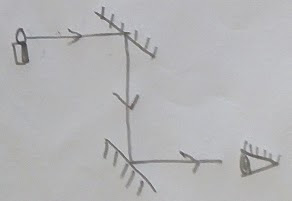
I'd bought this science kit for my 6 year old, using which she could make a periscope and a pin hole camera (Sorry, kiddo, this is what you get when both parents are engineers!). She likes to build such things – sometimes as something to play with, and always as something to brag to her friends. Of course, not satisfied with this, I insisted on teaching her how a periscope works. By drawing a pic of how light reflects off the angled mirrors of the periscope: Unfortunately, the lesson was lost in what followed: She : “What is that thing you’ve drawn at the bottom? ” Me : “An eye. Of the person who is viewing through the periscope. ” She : “Humph… you don’t even know how to draw an eye. ” Me : “Oh yeah? Like you can draw any better. ” She : “Of course I can.” To prove her point, Ms.Michelangelo drew some eyes for me: Were her drawings good? Sure, but I was not going to be distracted by art in a science lesson. But also, I also got why she thought my d...

The Language of Science

Why is the language of science English? I thought the answer to that question was the same as to why the language of the world is English: because the British ruled most of the planet. But that answer’s not true for science, argues Michael Gordin, a historian of science, in his book, Scientific Babel . Gordin points out how recently English took over the scientific world: “If you look around the world in 1900, and someone told you, 'Guess what the universal language of science will be in the year 2000', you would first of all laugh at them. It was obvious that no one language would be the language of science, but a mixture of French, German and English would be the right answer.” That actually makes sense. Sure, the British ruled the world, but the scientists were all in Europe, an area not exactly under British control! So why then has English become the dominant language of science since 1900? The short answer: the two World Wars. Now for the longer version....

Science via Comics

Recently, I was reading my soon-to-be-5 year old kid a kids’ encyclopedia on sea animals. The format of the book was to ask a question on each page and then proceed to answer it (along with photos). That format (ask and answer a specific question) is far more interesting to kids than the narration of tens of facts without any apparent why am I being told all this? The other thing the book had, which I didn’t pay much attention to, was a single panel comic drawing on almost every page to amuse the kid: stuff like a fish sleeping on a bed after switching off the light. It turns out that drawing comics as a way to teach science is an approach actually adopted by a guy named Jon Chad! One of his Science comics is titled Science Comics: Volcanoes: Fire and Life . So why does he take this approach ? “I think when a reader can link a fact (or, their memory of acquiring a fact) to some sort of immersive narrative moment, there's a relationship that forms that is stronger than i...

Future of Arts Jobs Ain't Gonna Change

My mom has frequently wondered if the non-science/maths jobs would start paying more in today’s economy as the nature and number of jobs increases. But with “software eating the world” (see my earlier blog ), I feel the opposite will happen: the demand for software knowledge will increase and the software industry will continue to disrupt most other parts of the economy. And by extension, jobs in those parts of the economy. Now, don’t get me wrong: software development rarely needs great science or maths knowledge, but companies still hire only engineers as software developers. (My guess as to why that happens is that companies feel that if you’re an engineer, you must have had the discipline to slog your way through school and college; and discipline and hard-work are welcome in all industries). Allen Pike writes that writing software used to be a job, not an art: “Programming hasn’t traditionally been thought of as a medium of creative expression…Software has historicall...

Pseudo-Sciences

Many fields use scientific jargon because it gives them the illusion of having rigour and intellectual depth. Like certain (post-modern) philosophies. In his book, Intellectual Impostures , Alan Sokal had this to say about one such philosopher, Jean Baudrillard: “One finds in Baudrillard’s work a profusion of scientific terms used with total disregard for their meaning, and above all in a context where they are manifestly irrelevant. Whether or not one interprets them as metaphors, it is hard to see what role they could play, except to give an appearance of profundity.” But let’s forget the charlatans for now. Instead, let’s focus on the cases where the reason for aping science and its methods isn’t malicious. Stephen Law points out that people genuinely believing that they are scientific even while believing in pseudo-science : “Our cultural landscape contains many belief systems which are intellectual black holes: as you approach them you find yourself getting drawn in. E...

MU-1: From Bathtubs to Relativity

(This is the first in a series on how maths seems to be the language in which the rules of the universe have been written: the “MU” in this series titles stands for “Mathematical Universe”). Long, long ago, science could be done by “by watching your bathtub spill over” (as Sabine Hossenfelder put it). All that began to change when Galileo began to argue that “the keys to deciphering the universe’s parlance were mathematical relations and geometrical models”, as Mario Livio put it in his book, Is God a Mathematician? But it would have to wait until Isaac Newton until someone came up with mathematical relations to describe the universe. In the process, calculus had to be invented because, as Charles Seife puts it in his book, Zero , “calculus was the very language of nature”. From Newton onwards, all of physics has been stated in mathematical equations. So much so that when Richard Feynman was asked whether we could have a theorist today who was “not mathematically sophisti...

Not a Science

During the 2008 financial crisis, central banks all over the Western world pumped money to bail out the very financial firms that were responsible for the crisis. As John Dickerson scathingly described : “Risk is supposed to be about choice and consequence. You take a chance and you win or you lose…companies that helped cripple the financial system were repaid by the government bailout. They took a chance, and lost—but they still won.” Now contrast the above with how the British government responded to the infamous Irish potato famine in 1845: they ascertained the high severity of the issue and then decided to do nothing ! Why? It was a time when Adam Smith’s theory ruled Britain with an iron fist. Felix Martin in his book, Money: The Unauthorized Biography : “Adam Smith had proved that it was allowing private self-interest to operate as freely as possible that most efficiently achieves the social good…Within seventy years of its publication, Adam Smith's theory of moneta...

Philosophy of Engineering

Image
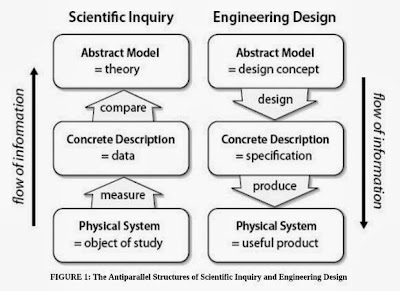
As a kid getting ready to go to engineering college, I am ashamed to say I barely knew the difference between science and technology (engineering) back then (they don’t ask such questions in the IIT-JEE exam). It took me a few years of being at work to finally get the difference. Or so I thought. Well ok, I was right about the parts I knew but turns out there are other aspects as well. I learnt all this after reading a few excerpts from the book, Radical Abundance , by Eric Drexler. First the part I already knew: “Scientific inquiry expands the scope of human perception and understanding; engineering design expands the scope of human plans and results.” Ok, that’s it: that’s all I knew. Drexler goes on to point out that in real life, the two fields often mix: “Engineering new instruments enables inquiry, while scientific inquiry can enable design.” and it is because of this intertwining of the two which can often “obscure how deeply they differ.” So what is this ...

Economics is Not a Science

I’ve always held that economics is not a science. I don’t mean that in a derogatory way. I say that only in an apples-are-not-oranges kind of way. The latest Nobel prize for economics just proved that (let’s set aside the stupidity of the Nobel committee at times, that’s a topic for another day). This year’s winners for Economics are Eugene Fama and Robert Shiller. In case you haven’t heard of either (and so don’t get the absurdity), let John Kay explain the ridiculousness of giving them the prize jointly: “Prof Fama made his name by developing the efficient market hypothesis, long the cornerstone of finance theory. Prof Shiller is the most prominent critic of that hypothesis. It is like awarding the physics prize jointly to Ptolemy for his theory that the Earth is the centre of the universe, and to Copernicus for showing it is not.” Kay says that people are neither hyper-rational (as Fama says) nor “slaves to our psychological weaknesses” (the Shiller model). Rather, he...

Right and Wrong

My dad and I disagree on whether things are ever wrong. Nope, the topic isn’t moral wrongs or nonsensical beliefs based on no justification. Rather the topic was about views or theories built upon available data which later proved to be…well, not correct. To me, such views or theories are wrong. (Just to be clear, I don’t mean the people who came up with those ideas were idiots). My dad disagrees: to him, if the view or theory was based on all available data of the time, then it isn’t right to call it wrong just because you got more data later on. I suspect that my dad believes that my stance is, to quote Issac Asimov: “Everything that isn’t perfectly and completely right is totally and equally wrong.” But I don’t believe that all wrongs are “equally wrong”. In fact, I fully agree with Isasac Asimov’s point about the relativity of wrong: “When people thought the earth was flat, they were wrong. When people thought the earth was spherical, they were wrong. But if you thi...