Posts

Showing posts with the label Writing

Why Write

Why should one write, asks (and answers) Shane Parrish. No, writing is “not just a vehicle to share ideas with others”. Rather: “Writing is the process by which you realize that you do not understand what you are talking about. Importantly, writing is also the process by which you figure it out.”   Paul Graham wrote the same thing: “A good writer doesn't just think, and then write down what he thought, as a sort of transcript. A good writer will almost always discover new things in the process of writing.”   In addition, writes Parrish: “Writing requires the compression of an idea. When done poorly, compression removes insights. When done well, compression keeps the insights and removes the rest. Compression requires both thinking and understanding.” I guess that’s what summary writing at school was trying to teach!   Another purpose of writing is to understand things for yourself – this is often called the Feynman learning technique , after the p...
Philosophy of History

In The Ocean of Churn , a book on events in and around the Indian Ocean, Sanjeev Sanyal wrote about what he calls the “philosophy of history”, or the style of writing history over the ages. Initially, all events were written about as if they were God driven. Others called it Fate, but it was the same concept: humans were merely the actors on the stage; the director was an external entity or force. Next came the Great Man Theory of history, a style where history was narrated as if it was decided by “heroic (or demonic) individuals whose thoughts and actions disproportionally influenced the course of history”. Think Alexander or Genghis Khan or Akbar. To some extent, this was obviously true since kings made the big decisions. Then again, as Sanyal reminds us: “History was financed directly and indirectly by ‘great men’ who liked to highlight their own importance.” The next phase of history is usually narrated to “emphasize grand social and economic forces”. The role of indivi...

Why be a Perfectionist?

Image
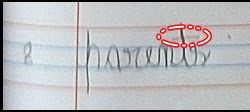
At school, my 5 year old gets tested on the spellings of 10 new words each week. The list of those 10 words is published upfront; and so parents have to make the kid practice and learn them during the course of the week. The first week, she got all of them right; an “Excellent!” and 2 stars from the teacher; and applause from the class (the applause was for all the kids who got all 10 words right). Boy, was she proud and happy! As we worked on the words for Week #2, by Day 5, I was irritated that she was always confused about the spelling of “parents” (is it “pa” or “pae”?). Upon which she snapped and we had this very amusing conversation: She : “So you want me to get all 1o right all the time, is it?” Me : “Yes, that is exactly what I want.” She : “Why? Even if I get 9 of them right, my teacher will still give me a star.” As Hobbes once told Calvin , she had me “wriggling in the crushing grip of reason”. Anyways, I stuck to my guns, and by the day of the test, it...

Planning, Drugs and Alcohol

In my last blog, “ Only Fools Charge In ”, I talked about how the guy who didn’t think it through, didn’t analyze things as much, was too arrogant or ignorant than to know better is often the guy who comes up with the creative idea, the Next Big Thing…because he is forced to be creative after he charged in and got stuck. As someone who lies at the other end of the spectrum (I like to plan, to analyze, to consider the odds of success before I start something), that seems a bit unfair. The don’t look before you leap guy, the ignorant and the arrogant are more likely to have that creative spark? And then it got worse. I read this piece about writers and creativity : “Choose your drug: alcohol, marijuana, mushrooms… Any one of these will make your writing better, especially if you’re writing something personal. Writing is only interesting to other people if it is deeply revealing. Your brain has a self defense mechanism which prevents you from divulging too much of yourse...

In Defense of All-Caps

On June 11, the US navy announced that they would stop transmitting internal communications in all-caps. Because lowercase messages, they said, “provide a more readable format”. It took them this long to figure that out? And then they wonder why there are jokes about Military Intelligence being a contradiction in terms? Ok, so the rest of us non-military folks (“civilians” in military speak) always knew that convention says that if it’s all-caps, then you must be screaming. But have you ever wondered whether all-caps is ever a good thing? In the sense that all caps might convey the message better than the regular style? Lindy West says YES (that’s in all-caps, in case you missed it). Given below are a few reasons. First off, they convey what you really feel: “I LOVE THE UNFILTERED, UNAPOLOGETIC PUSHINESS OF ALL-CAPS. I LOVE THE BREAK FROM PROPRIETY. I LOVE THE HONESTY OF IT. I LOVE LETTING LOUD FEELINGS BE LOUD.” Which is why, she argues: “ALL-CAPS ARE A VITAL LITERARY ...

To Quit or Not to Quit (Writing)?

Image
A young writer presented his first work to Philip Roth and this was how the conversation went: “he (Roth) told the guy to quit writing. Here’s the exact quote: “I would quit while you’re ahead. Really. It’s an awful field. Just torture. Awful. You write and you write, and you have to throw almost all of it away because it’s not any good. I would say just stop now. You don’t want to do this to yourself. That’s my advice to you.” Elizabeth Gilbert argued against Roth’s advice: “Now, listen. While it is certainly not historically unheard of for famous authors to complain about their torturous lives (Balzac: “I am a galley slave to pen and ink”; Styron: “Let’s face it. Writing is hell”; Mailer: “Every one of my books killed me a little more”) this statement — by one of America’s most lauded living novelists — struck me as particularly cranky. Because, seriously — is writing really all that difficult? Yes, of course, it is; I know this personally — but is it that much more...

The Written Word

I read this extract from Plato’s Phaedrus about a discussion that the impact of the invention of writing would have on the future: Inventor : “My discovery provides a recipe for memory and wisdom”. King : “You know, Phaedrus, that is the strange thing about writing, which makes it truly correspond to painting. The painter’s products stand before us as though they were alive. But if you question them, they maintain a most majestic silence. It is the same with written words. They seem to talk to you as though they were intelligent, but if you ask them anything about what they say from a desire to be instructed they go on telling just the same thing forever. ” What the king says is partially true: you can’t have a conversation with written text the way you can with a person. But here’s the thing about writing: you can read, pause, think about it and then continue reading. Or go back, re-read and continue. No prizes for guessing which way we learn more: listening or reading...