Posts

Showing posts with the label books

Books and Blogs

Tech blogger, Ben Thompson, wrote this great blog on the key difference between books and blogs (Beyond the obvious one: size): “A book, by necessity, is a finished object.” Which is perfectly ok in case of say, novels. But on almost any serious topic, as Robert Pirsig wrote in Zen and the Art of Motorcycle Maintenance : “The trouble is that essays (or books) always have to sound like God talking for eternity, and that isn’t the way it ever is. People should see that it’s never anything other than just one person talking from one place in time and space and circumstance. It’s never been anything else, ever, but you can’t get that across in an essay.” A blog, on the other hand, is not a manuscript. Rather, Thompson says it is an “intellectual exploration directly and on an ongoing basis”: “While books remained a fantastic medium for stories, both fiction and non, blogs were not only good enough, they were actually better for ideas closely tied to a world changing far mo...
Atomic Unit

Why was the Internet so destructive to the music and newspaper industry but not to books? (While bookstores have indeed got hit, books haven’t). Evan Hughes points out the difference between those industries in his article titled Books Don't Want to Be Free , a shot at the Internet mantra of “Information Wants to Be Free”: “Part of the problem for journalism, music, and television is that they are vulnerable to disaggregation. Their products are made up of songs and articles and shows that have long been consumed in those individual units. Once the Internet made it possible to ignore the unwanted material, overall value slipped.” But books are different: “It would make little sense to break novels or biographies into pieces, and they’re not dependent on the advertising that has kept journalism and television artificially inexpensive and that deceives the consumer into thinking the content is inexpensive to make.” To put it differently, the Internet showed us that t...

Taking Notes on Books

Arthur Schopenhauer once wrote : “In reading, the work of thinking is, for the greater part, done for us…our head is, however, really only the arena of some one else’s thoughts.” And so, he wrote, someone who only reads but never reflects or analyzes would have “have read themselves stupid”! Not everyone is a passive reader, of course. As Shane Parrish pointed out : “One of the ways we chew and digest what we’re reading is to comment on something someone else has written. We do this through Marginalia — the broken fragments of thought that appear scribbled in the margins of books. These fragments help us connect ideas, translate jargon, and spur critical thinking.” I’ve never been able to get myself to write notes or even mark passages on a book. Besides, the margins aren’t always large enough to write enough, are they? So the ability to highlight passages and make notes on an e-book via a Kindle is like a God send for someone like me. Even better, the next time the Kin...

Lists: Who Even Cares?

It’s that time of the year when everyone publishes Top 10 or Top 25 kind of lists. It’s no different with book lists “coming soon to a friend’s Facebook wall near you ”, as Michelle Dean puts it . In case of book lists, Dean is horrified to see the number of books being mentioned: NPR had 250, the New York Times Book Review had 100! As Dean says: “The hugeness of these lists betrays something: their uselessness. ” Who even scrolls past the Top 25 (at most), she asks? And so: “It feels like the work of marketers, not of people who care about identifying good books. ” I agree with Dean but wonder, how many of us really read books on topics outside our normal area of interest anyways? Well ok, even if you’re the exception, I’m betting that is still a very tiny fraction of what you read. In the age of Amazon and Goodreads, who even looks up these lists anyway? Aren’t we far more likely to read the “People who bought/liked this book also bought/read…” recommendations sin...

The Un-read

I started reading this book by Niall Ferguson titled Colossus: The Rise and Fall of the American Empire . The first quote in the book was by Thomas Jefferson and I loved it: “Old Europe will have to lean on our shoulders, and to hobble along by our side, under the monkish trammels of priests and kings, as she can.” How prophetic! The reason I picked up the book was that I don’t consider America an empire; so I was curious. Ferguson seemed to know most readers wouldn’t either, so he went to extraordinary lengths to change the definition of empire from what the British/Spanish/French had to, well, something. It didn’t make any sense and my eyes glazed. Then he quoted American military bases in Japan and Germany as signs of an empire. Really? Did Ferguson check whether the Japanese wanted the US to leave so they could be walked over by the Soviets first and the Chinese today? If you really want a foreign army on your soil, it’s not called an occupation. As you might have gu...

Hoping for a Bibliophile

Image
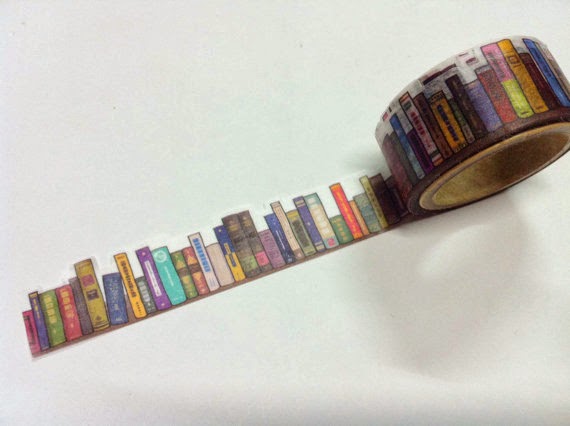
I saw this pic of a cello tape that Etsy seller Light Life sells “for sealing up your boxes and making them look like they're libraries for tiny flatlanders”, as Boing Boing put it and I just had to share it: And while we are on books, when the teacher at my daughter’s school introduced the word “library” to the class, my two and a half year old responded with “It has a lot of books”. Here’s hoping she stays interested in books for the rest of her life, and in the short term, in school books!

Books for All Ages

The second Harry Potter book had this blurb:  “I’ve yet to find a child who can put it down. Magic stuff.” Considering how popular the series became with adults and kids, and made JK Rowling the first billionaire author in history, it’s easy to laugh at that blurb. Only kids can’t put it down? Does magic appeal only to kids? Really? Benefit of hindsight aside, it made me realize that Maurice Sendak was right on how books get (mis)categorized: “I don’t write for children. I write — and somebody says, ‘That’s for children!’” JRR Tolkien went a step further and questioned whether even fairy tales are only for children, not adults : “In describing a fairy-story which they think adults might possibly read for their own entertainment, reviewers frequently indulge in such waggeries as: “this book is for children from the ages of six to sixty.” But I have never yet seen the puff of a new motor-model that began thus: “this toy will amuse infants from seventeen to seventy”...

Books as Portholes

Image
Alice had her rabbit hole. We in the 21 st century have to content ourselves with books as our portholes to a whole new world: Of course, the porthole experience can only be had if one takes the Peter Birkenhead approach to choosing which books to read: “If a book can’t disorient me just a little bit, if it can’t get me some kind of lost, I won’t stay with it for very long.” As an example, he cites books by “(Richard) Feynman, (Stephen) Hawking, (Brian) Greene, and their ilk”: “Their books may be my least favorite to read, but as I do, and the universe they describe grows curiouser and curiouser, I become more intrigued.” As someone who has read all 3 authors, I would say amen to that. Of course, this porthole experience isn’t limited to physics alone. Birkenhead again: “Literature provides passage toward the self, not away from it, promising escape only from the temptations of escapism. It makes visible a world that exists in the spaces between things: book a...

Books as Source of Truth

One of the comments I listed in my last blog raises an interesting point. The comment I refer to was this: “There is a common ancient horridly flawed assumption often afoot that if something is written in a book, it must be true or will become so. There is zero basis for that assumption. The first book supposedly ever mass-printed was a bible. Enough said. Books were originally designed to spread words, period. They could be fact, fiction, opinions or folklore.” Both points are true: most people do trust the printed word. Even though printed does not equal truth. Now consider the other source of truth that most people trust: Wikipedia. Though we don’t realize it most of the time, even Wikipedia relies on other sources of truth, though not necessarily only printed books. In case you didn’t know it already, this is the Wikipedia philosophy: “Wikipedia is not ‘truth’, Wikipedia is ‘verifiability’ of reliable sources . Hence, if most secondary sources which are taken as reliable happen ...

Different Forms of Loneliness?

Mathew Ingram asked if there was a contradiction in decrying social media for making people lonely while simultaneously celebrating the value of the solitary experience of reading books. In response, Mike Masnick said he felt the reasons for the difference in stances on the two were: -          A generational thing : what Doughlas Adams called the “anything that gets invented after you're thirty is against the natural order of things and the beginning of the end of civilization as we know it” stance. -          Snobbishness : social media is idle chatter whereas reading is educative. Masnick then threw the question open to the (Internet) audience. Here are the comments I liked from that forum. One guy said it was “ because the intelligence level of books can pretty much always be appropriate to the person, social networking however almost always devolves into the lowest common denominator which is almost u...