Posts

Showing posts with the label models

Models and Laws

Physics envy: it’s a term used to describe the almost desperate attempt of the social sciences to be like physics, i.e., have maths, equations and predictability. Coming up with a mathematical, equation rich representation of things in a social science is extremely hard. Mostly because of that extremely annoying little attribute of humans called free will . Those pesky humans tend do what they like based on their mood, even things that aren’t in their best interest! As someone once said, man isn’t a rational animal; rather, he is a rationalizing animal… But wait a minute, you say, doesn’t economics (and its cousin, finance) have a lot of equations? Ah, true, but those are just models. Whereas physics has laws (“laws of physics”). What’s the difference between a model and a law? Let Emanuel Derman explain : “In physics, Maxwell’s theory and quantum mechanics allow you to predict the way an electron spins about its own axis inside a hydrogen atom to an accuracy of twelve dec...
Models v/s Patterns

Image
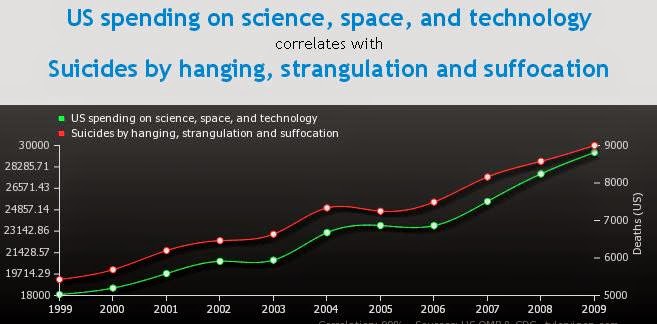
In response to my blog on the three generations of the Internet , my dad had commented: “Are we all stuffing ourselves with data and information, with very little time and inclination left for sharpening our innate, marvelous tool that evolution has led us to - the ability for digging meaning out of abundant data?...Will we have humankind reduced its ability to mind's ability for keen insights, failing to appropriately sharpening our grand mind potential?” Such questions have been asked and debated for years (ironically) on the Internet! Is correlation good enough? For example, Big Data would allow algorithms to tell you where the planet would be without ever discovering Kepler’s laws of planetary motion; but is that the same as knowledge? On the other hand, can laws only be found for the inanimate universe? And is Big Data the (only) way to go when it comes to predicting humans? Is George Box’s statement (“All models are wrong, but some are useful.” ) so true for humans th...